English - Writing
Writing
WHY: At Connaught, we want all children to embrace the power of the written word. To write well means to be able to communicate effectively with a range of different audiences and for different purposes.
WHAT: Through our creative curriculum, we ensure that the children have a strong sense of purpose to their writing in order to motivate and inspire them to produce writing of a high standard.
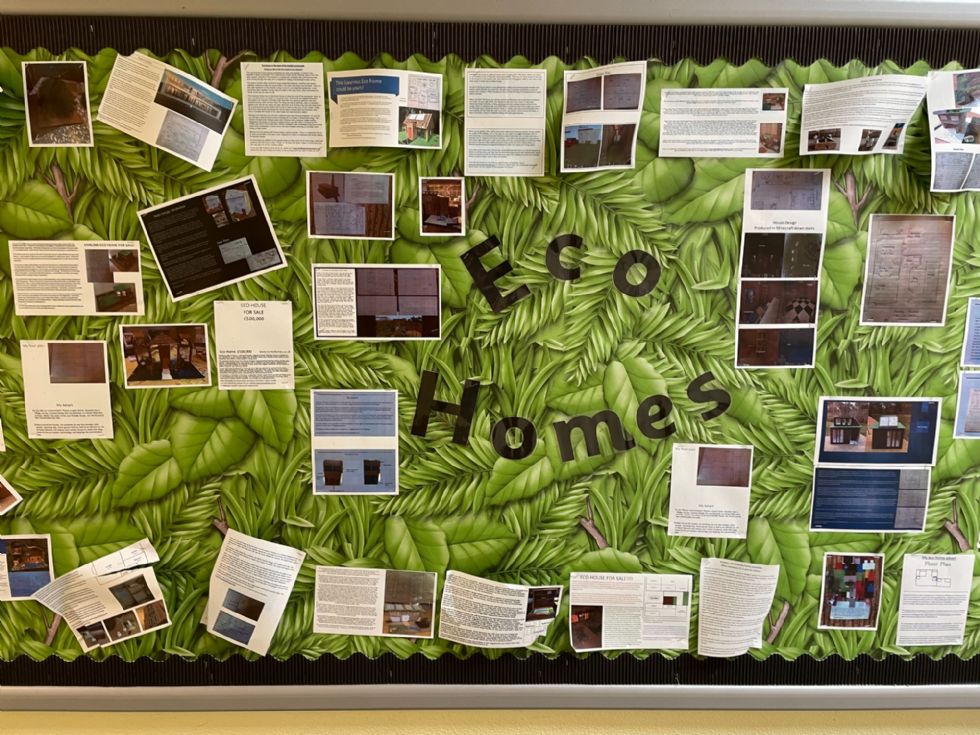
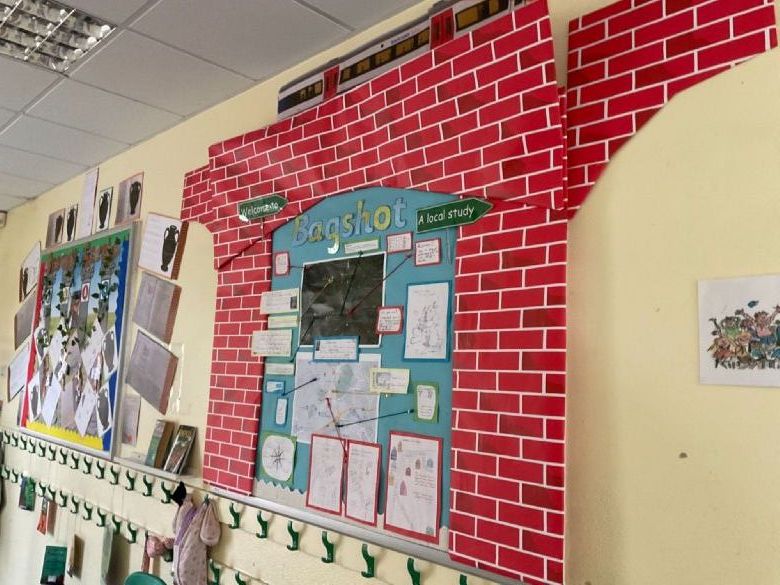
HOW: Through the use of inspiring texts, drama, multi-media, and simulated experiences (such as inventing a product to pitch to the Dragons’ Den or discovering that the Bagshot Highwayman has ransacked the classrooms), the children are fully immersed in their learning and therefore engaged in their writing.
Curriculum Overview for Writing
Intent
At Connaught Junior School, we intend for all children, including those who are disadvantaged or have SEND, to experience a range of different genres through real life experiences, engaging hooks, purposes and audiences. Throughout their time at Connaught, children will develop the love of writing and be able to express their thoughts and ideas clearly and creatively, with the skill of editing, re-reading and improving their own work. In each year group, the children will confidently be able to use the essential skills of grammar, punctuation and spelling to meet age related expectations, enabling them to allow their imagination to flourish. They will leave Connaught with the confidence to use these skills for a range of different writing purposes.
Implementation
Through our well-structured curriculum, children are given a purpose for their writing with children writing across a range of genres in each year group. Teachers use a variety of strategies to ensure that their pupils make good progress with their writing, such as exploring modelled texts, explicit live modelling of literary devices, grammar and punctuation, shared writing as a class, giving specific and individual targets for each child and scaffolding learning for lower-skilled learners. We ensure that children have a good understanding of the writing expectations for their year group and know the skills that they should be using to show off their talent as writers.
Impact
It is clear from looking at the children’s work that as they progress into UPKS2, they can write in a range of different genres and are aware of the needs of their audience. This is evident from monitoring of our books. Children transfer their writing skills into all areas of the curriculum and writing opportunities are provided across all the different topics.
The Writing Journey
Writing is a complex skill which needs careful modelling and support. As such, we take the children through three phrases which are: investigating the text type, experimenting with the text type and writing and editing.
Phase 1: The children are presented with a writing opportunity for their topic, and understand the purpose. In this phase, they read high quality texts in order to create a success criteria by finding the 'shape' (format and features) and make comparisons with other genres where appropriate.
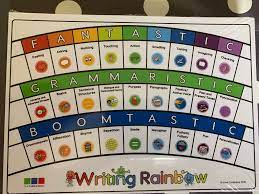
Phase 2: During this phase, children collaborate to share vocabulary and phases around a target lens (see the rainbow below for the lenses) to create a hole class write based around the genre they are working on. All children will have the opportunity to add to this and get to magpie examples from each other and the teacher. This process is called 'chotting' because the children are 'chatting' about their ideas and 'jotting' these down in their books to use later on in their work. Children complete 'kind calling out' which is where they share their vocabulary freely in an open forum. Once they have gathered their vocabulary, the teacher models how to use this to construct sentences related to their class write, identifying the grammar features to include to stretch and challenge.
Phase 3: The children are now ready to begin researching and planning for their own piece of writing using the genre. During this phase they will participate in exciting experience days to engage and immerse them in the topic they are writing. The children have time to plan the structure of their text using plot points, emotion scale of their main character and chosen lenses.
Phase 4: The children now draw upon their sentence stacking, class write and planning to independently construct their own writing piece. Whilst writing, they have full access to classroom resources such as thesauruses, dictionaries, year group writing check lists, word mats and work from previous lessons.
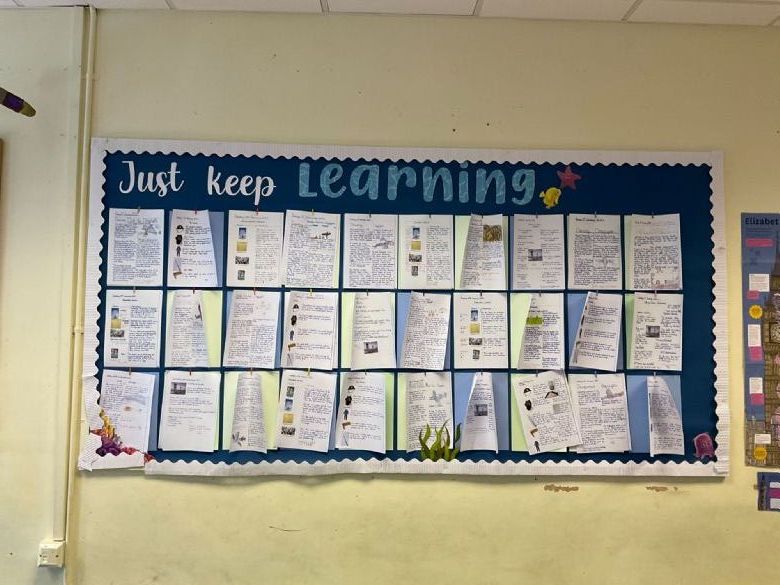
Here are some examples of the children's writing:
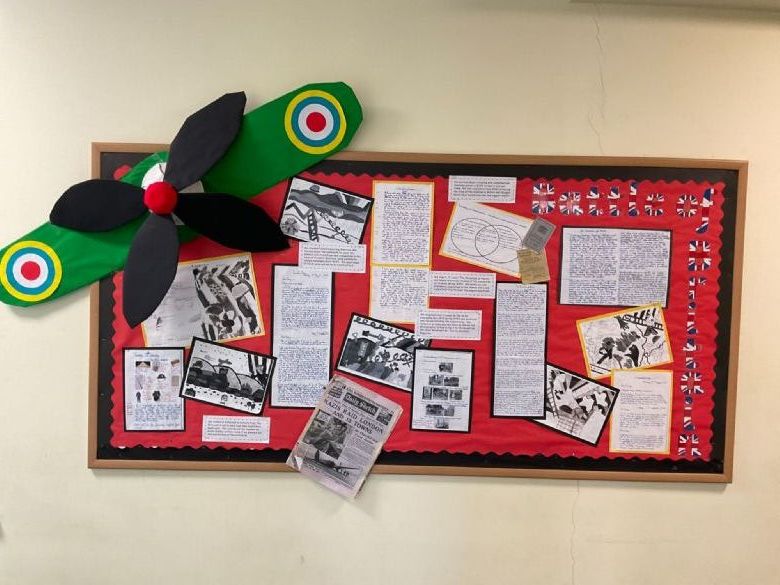
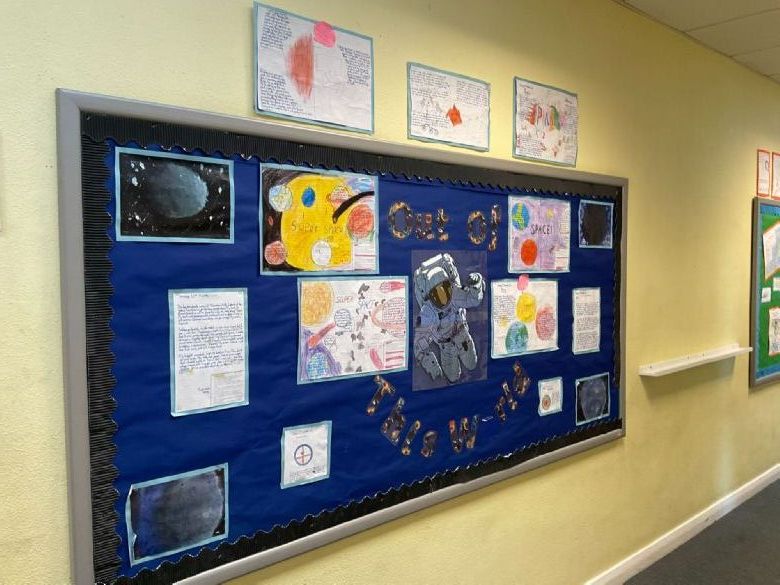
Other examples of writing across the school
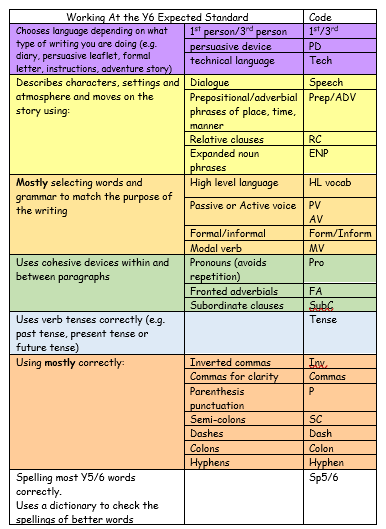
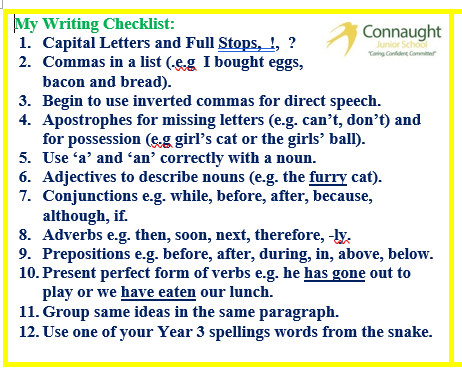
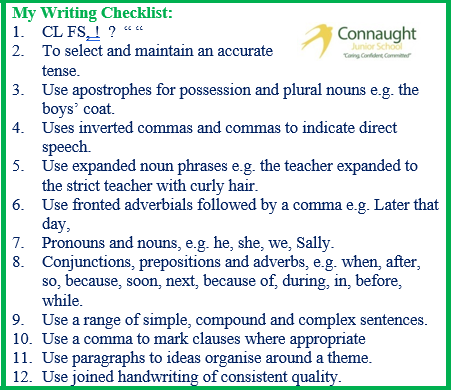
Writing check list.
Year 3
Year 4
Year 5
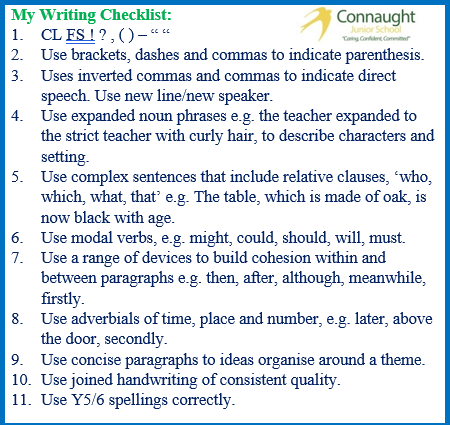
Year 6